Thakali food is one of the best-known meal traditions in Nepal, but its story starts much earlier than its popularity in city restaurants. To understand thakali food history, it helps to begin with the Thakali community of Mustang, where this cuisine grew out of local life, mountain geography, and long-distance trade. Over time, what began as a regional food tradition became one of Nepal’s most recognized dining styles.
The roots of this cuisine are closely tied to Thak Khola in Mustang, a region shaped by movement, exchange, and adaptation. The history of Thakali food is not just about recipes. It is also about how people lived, what they traded, which ingredients they had access to, and how they turned practical mountain meals into a lasting part of Nepali food culture.
Origin of Thakali Food in Nepal
The Thakali community of Mustang
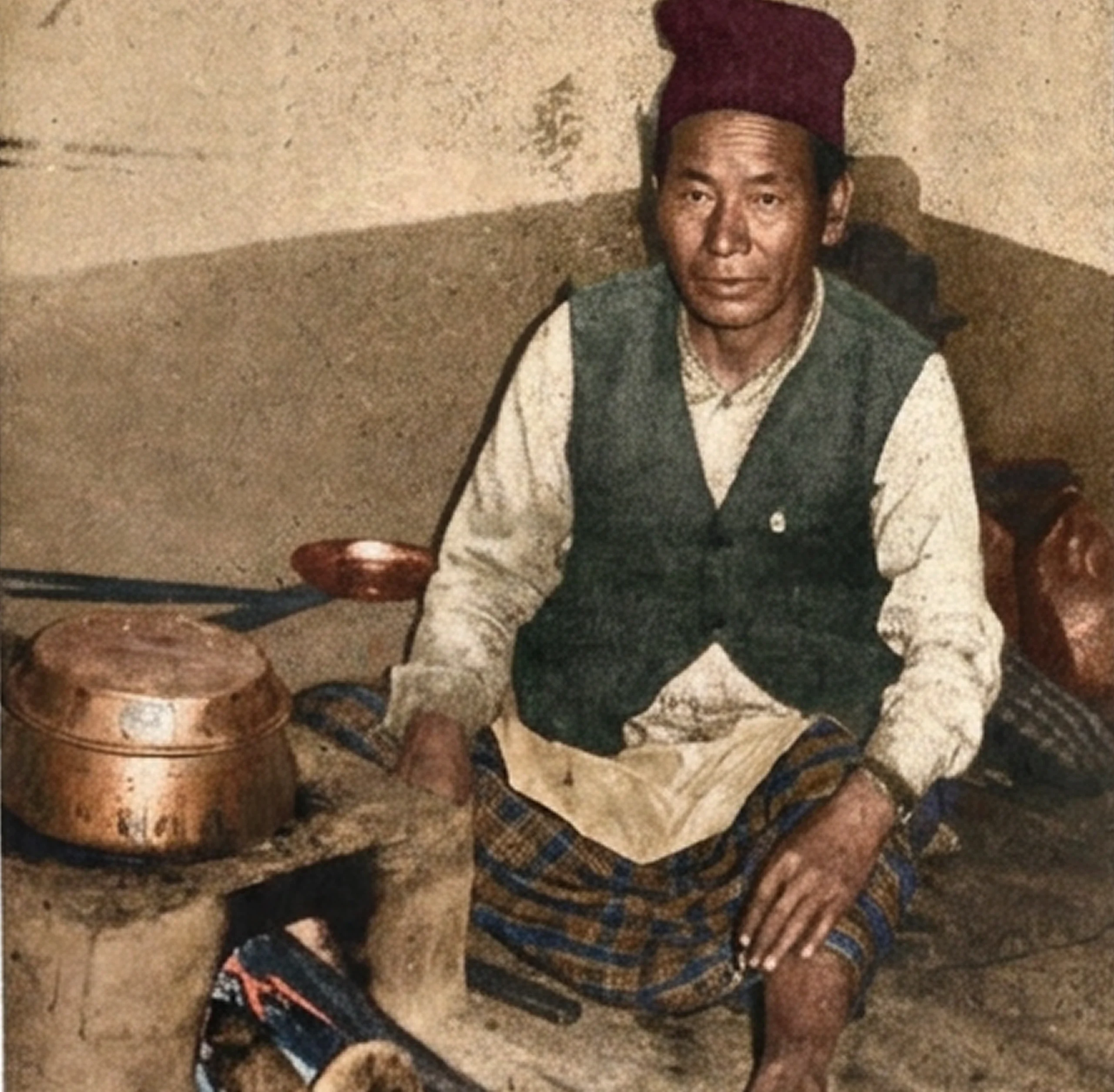
Any clear look at thakali food history starts with the Thakali people. The Thakali community is associated with the Thak Khola area of Mustang, a Himalayan region known for its strong trading tradition, hospitality, and distinct regional culture. Their food developed as part of everyday life, not as a restaurant concept from the beginning.
Thak Khola as the birthplace of the cuisine
The origin of Thakali cuisine is usually traced to Thak Khola, a part of Mustang that sat along important movement and trade routes. Because the region connected mountain communities with wider trade networks, its food culture did not remain isolated. That is one of the key reasons thakali food history feels both deeply local and broadly influential.
How mountain life shaped early food habits
Early Thakali meals were shaped by the realities of mountain life:
- Local grains and produce
- Need for practical meals
- Climate influence
- Simple but nourishing food
How Trade Influenced Thakali Cuisine
The Nepal-Tibet trade route
A major part of thakali food history is trade. Thak Khola lay along the Nepal-Tibet trade route, where caravans moved goods such as salt, grain, and wool through the Kali Gandaki corridor. This gave the Thakali people constant contact with traders and travelers, which shaped both their economy and their food habits.
Contact with different food cultures
Because of that trade network, Thakali households were exposed to different ingredients, cooking styles, and food customs. Writers on the origin of Thakali cuisine commonly describe influences from both Nepali and Tibetan food traditions, which helps explain why Thakali meals feel familiar but still distinct within Nepali cuisine.
Why Thakali food has changed over time
- Trade brought new foods.
- People who traveled shared their eating habits.
- Different cooking styles slowly came together.
Traditional Features of Early Thakali Food
A meal built around balance
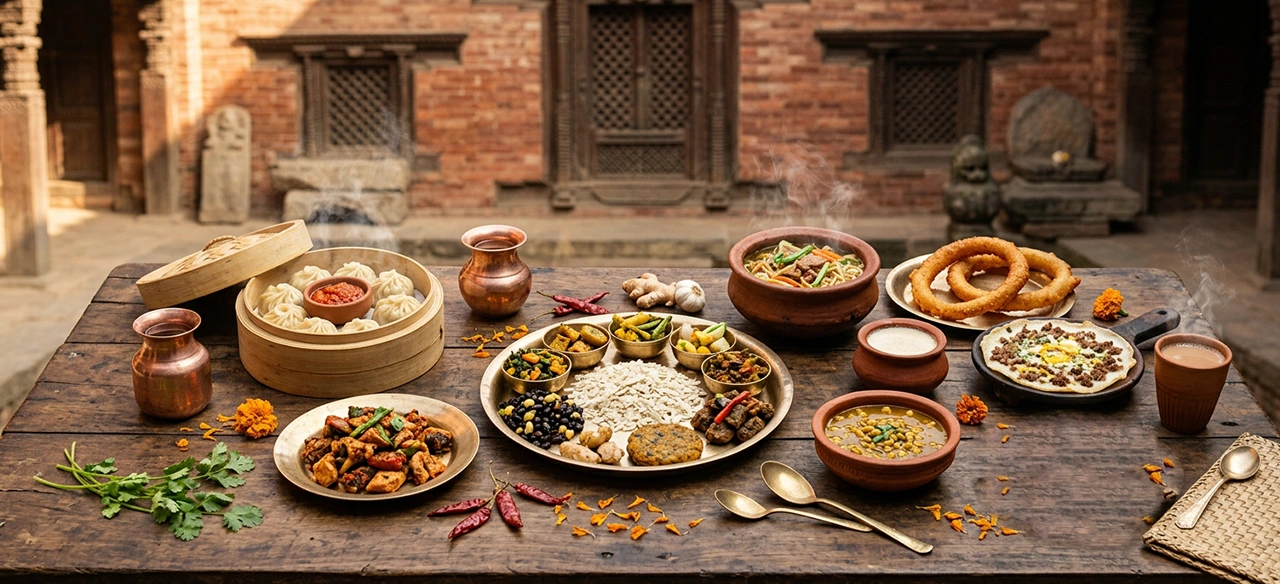
Traditional Thakali food is known for balance. Even in its older forms, the meal was built around staples such as rice, lentils, vegetables, pickles, and side dishes that made the plate feel complete. This balance is one reason thakali food history is still relevant today. The meal was never only about taste. It was also about structure and nourishment.
Why Thakali meals were practical and complete
In mountain communities, food had to be satisfying, practical, and suitable for daily life. That helps explain why traditional Thakali food became known for complete meal sets rather than one single signature dish. A plate that combined dal, rice, vegetables, achar, and sometimes meat made sense for both households and travelers.
Common features of traditional Thakali meals:
- Dal and rice
- Vegetable dishes
- Achar (pickles)
- Regional ingredients (Jimbu, Timmur)
- Optional meat dishes
From Local Homes and Inns to Popular Restaurants
The role of inns and roadside hospitality
The growth of thakali food history is also tied to inns and roadside hospitality. Nepal News describes the role of winter bhattis and travel culture in spreading Thakali food, while other sources note that Thakali families ran inns that served traders, pilgrims, and travelers. These spaces helped turn regional cooking into a recognized dining tradition.
How Thakali food reached Nepali cities
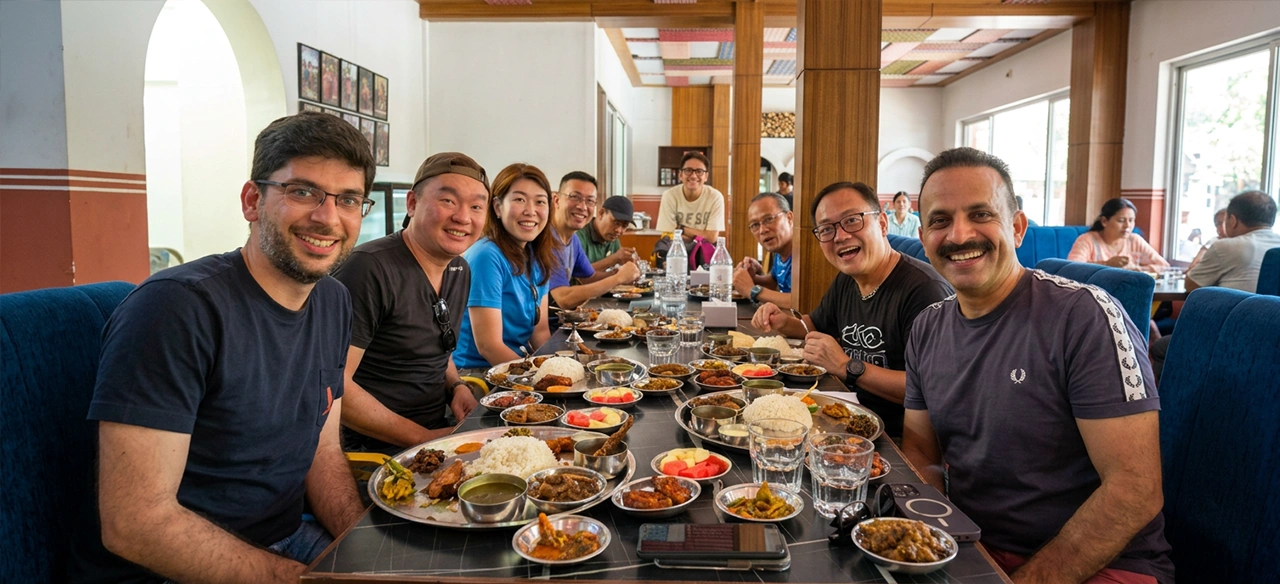
As travel patterns changed and more people moved between regions, Thakali food traveled with them. Over time, it reached urban centers and became a popular restaurant meal. Restaurants helped standardize the idea of the Thakali set and made it familiar to people far beyond Mustang.
Why city diners started loving Thakali food
- Full meal in one serving
- Authentic taste
- Variety on one plate
- Strong cultural identity
Why Thakali Food Became So Popular in Nepal
A strong regional identity
One reason thakali food history matters is that the cuisine kept its regional identity even as it spread. People did not see it as just another meal. They saw it as something clearly tied to Mustang, the Thakali community, and Himalayan food culture.
A meal that feels both traditional and widely appealing
Thakali food became widely loved because it feels traditional without being difficult for new diners to understand. The structure is clear, the plate is balanced, and the flavors are approachable. That combination helped it move from local homes to national popularity.
- Rich history
- Balanced meal structure
- Recognizable Nepali identity
- Popularity in restaurants across Nepal
Thakali Food History in Modern Nepal
From heritage cuisine to a national favorite
Today, Thakali food is often treated as one of Nepal’s signature meal styles. Modern articles describe it as a national favorite, not just a regional specialty, which shows how far the cuisine has traveled from its Mustang roots.
How the cuisine has changed but kept its roots
Restaurant versions may be more polished or standardized than home-cooked ones, but the core identity stays the same. The food is still focused on balance, variety, and a strong link to Thakali culture. For example, Monalisa Thakali says it helped make Thakali dining more popular with a wider audience and calls itself Nepal’s first Thakali restaurant. This shows how restaurant culture became part of this larger story.
- Cultural connection
- Meal balance
- Regional pride
- Authentic preparation
FAQ About Thakali Food History
Where did Thakali food originate?
It originated in Thak Khola in Mustang and is closely linked to the Thakali community of that region.
Who are the Thakali people?
They are an ethnolinguistic community associated with the Mustang region, especially Thak Khola, and are well known for trade, hospitality, and cuisine.
Why is trade important in Thakali food history?
Trade connected the Thakali people with Tibet and other regions, which influenced ingredients, cooking styles, and the spread of the cuisine.
Is Thakali food originally from Mustang?
Yes. The origin of Thakali cuisine is generally traced to the Mustang region, especially Thak Khola.
Why is Thakali food famous in Nepal today?
It is famous because it combines history, balance, regional identity, and restaurant popularity in one recognizable meal tradition.
Conclusion
Mustang, trade, and tradition all sit at the heart of this cuisine’s story. Looking at thakali food history shows why the meal became so important in Nepal. It began as a practical regional food tradition shaped by the Thakali community and mountain trade life, and it grew into one of the country’s most respected and recognizable cuisines.