If you have ever visited a Nepali restaurant or traveled through Nepal, you have probably heard people talk about Thakali food. To answer the question what is Thakali food, it is a traditional meal style that comes from the Thakali community of Mustang, especially the Thak Khola region. It is one of Nepal’s most recognized and loved meal traditions, known for its balance, variety, and satisfying taste.
Thakali food is not just one single dish. It is a complete meal built around rice, lentils, vegetables, pickles, and often meat or other side dishes. Many people see it as one of the best examples of authentic Nepali cuisine because it feels both homely and carefully prepared. For anyone who wants to understand Nepali food culture better, learning what is Thakali food is a great place to start.
- Definition: Thakali food is a traditional meal style from the Thakali community of Mustang, Nepal.
- Components: It usually includes rice, lentils, vegetables, pickles, and often meat.
- Identity: It is known for balance, variety, and a strong regional identity.
- Presentation: A Thakali meal is often served as a complete set, also called a Thakali khana set or Thakali thali.
- Status: It is one of the best-known forms of authentic Nepali cuisine.
What Is Thakali Food?
A simple definition of Thakali food
The simplest answer to what is Thakali food is that it is a traditional meal culture linked to the Thakali people of Mustang in Nepal. It is usually served as a full plate or set meal with several small items arranged around the main staples. Instead of focusing on just one curry or one main dish, Thakali food is built around balance and combination.
Why Thakali food is so popular in Nepal
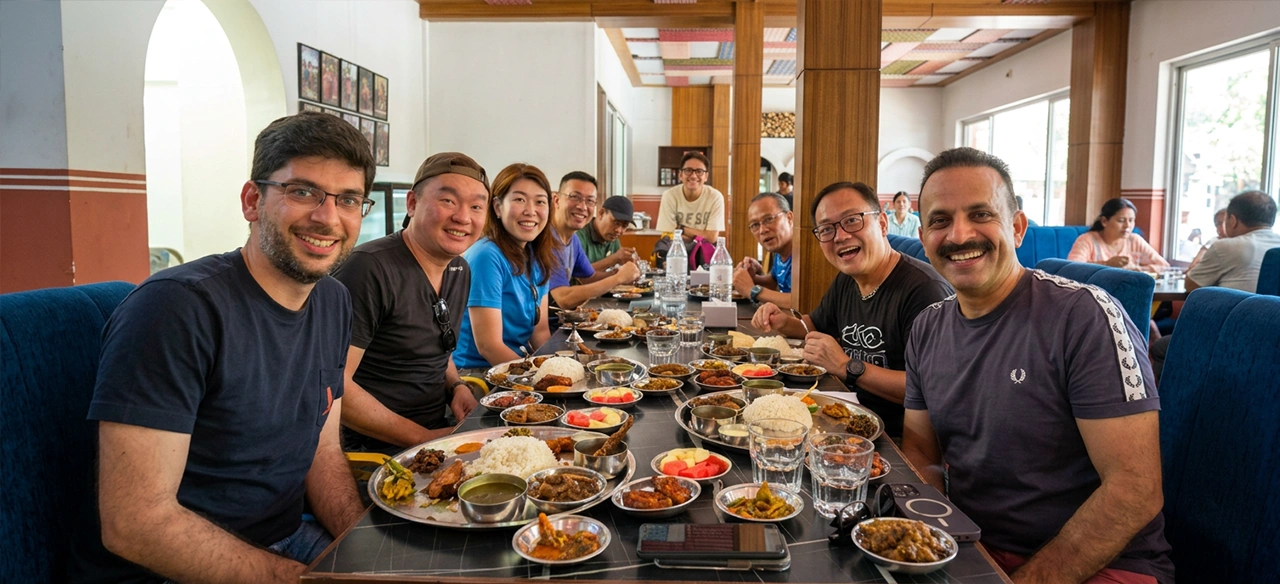
Thakali food is popular because it gives people a complete meal in one sitting. It feels filling, flavorful, and comforting at the same time. A good Thakali thali offers soft rice, warm dal, fresh tarkari, spicy achar, and sometimes meat curry, all on one plate. That variety is one reason why people across Nepal keep coming back to it.
Why it is more than just dal bhat
At first glance, some people think Thakali food is just another form of dal bhat. It does include dal and bhat, but it is usually more refined, more varied, and more carefully arranged than a basic everyday meal. When people ask what is Thakali food, the real answer is that it is a complete traditional meal style with a stronger regional identity and a more curated set of flavors.
Where Does Thakali Food Come From?
The origin of Thakali food in Thak Khola, Mustang
To understand what is Thakali food, you need to understand where it comes from. Thakali cuisine origin is closely tied to the Thak Khola region of Mustang in northern Nepal. This area lies along important Himalayan routes and has its own food traditions shaped by local ingredients, climate, and history.
The Thakali community and their food tradition
The Thakali community is known for its long and rich food culture. Over time, the meal style associated with this community became popular far beyond Mustang. Today, when people talk about Thakali food in Nepal, they usually mean a meal that reflects Thakali traditions while also fitting into wider Nepali food culture.
How trade and geography shaped Thakali cuisine
The geography of Mustang played a major role in shaping traditional Thakali food. Mountain life influenced what people could grow, store, and cook. Trade routes also helped bring new ideas and ingredients into the region. This is why Thakali cuisine often feels both local and layered.
- Mountain geography
- Regional ingredients
- Tibetan and Nepali influence
- Trading history
What Is Included in a Traditional Thakali Meal?
Rice, lentils, and vegetables as the base of the meal
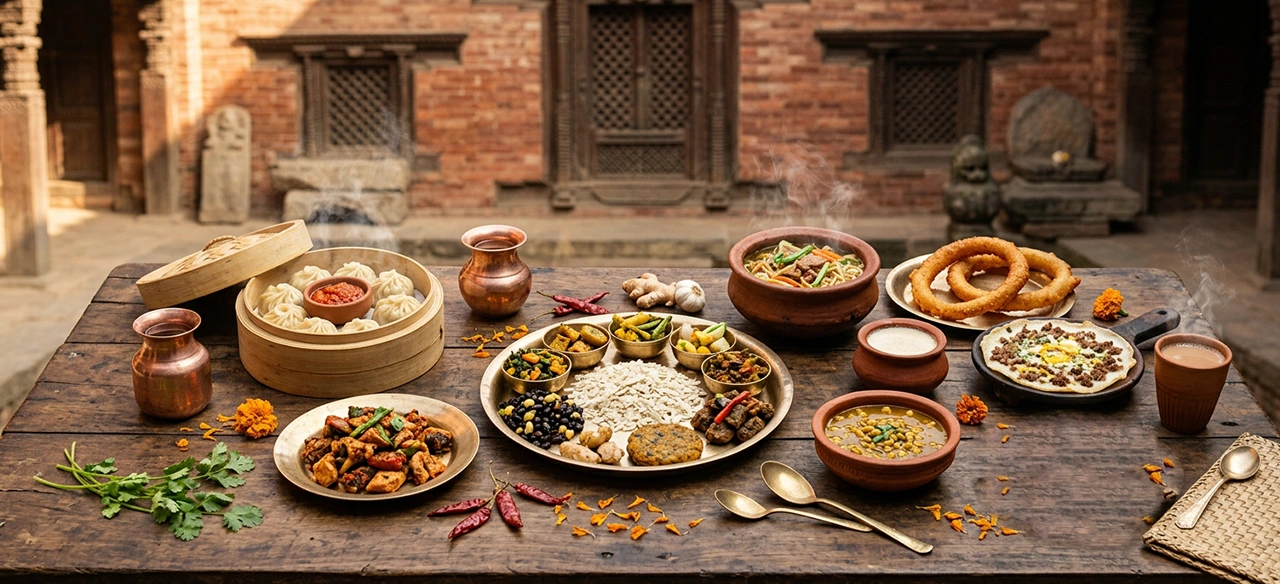
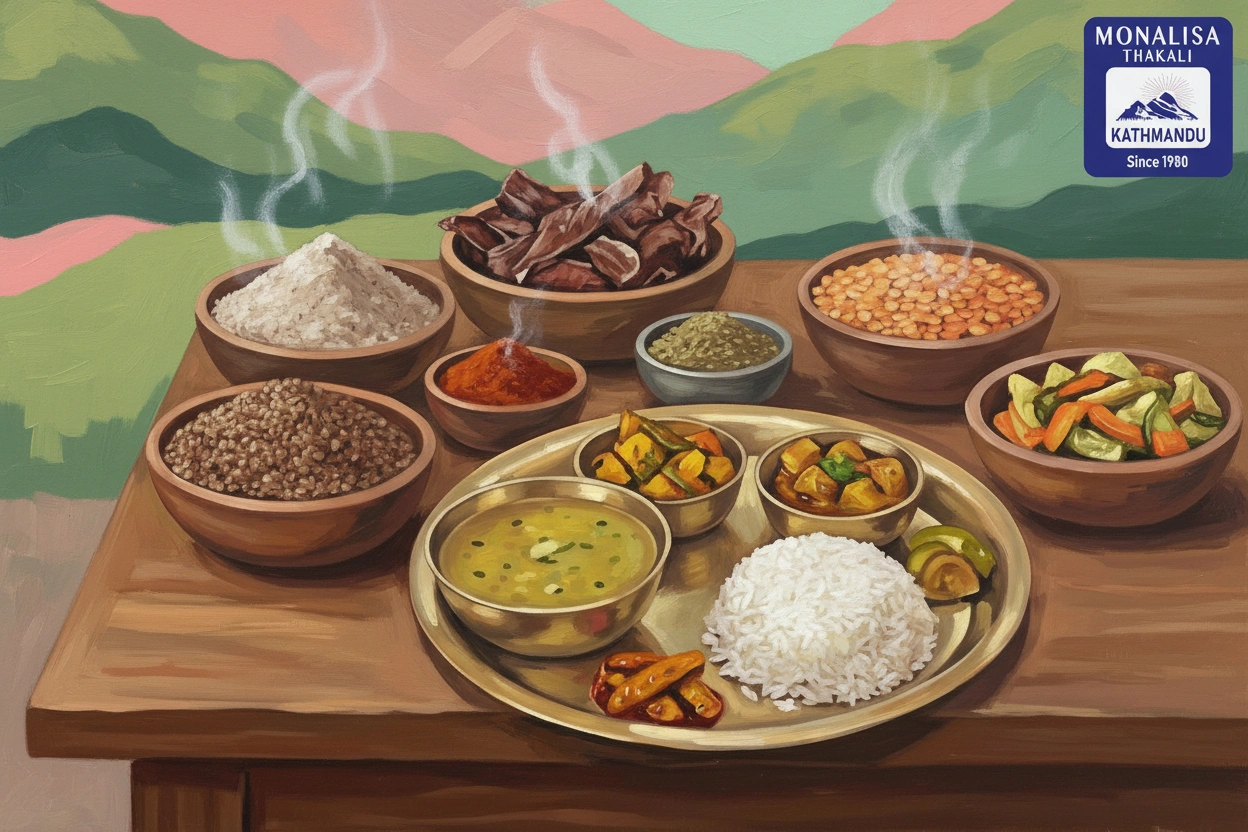
When people search for what is in a Thakali set, they usually want to know what appears on the plate. The base of a Thakali meal Nepal is usually rice, dal, and tarkari. Rice and lentils form the heart of the meal, while vegetable dishes add freshness, color, and variety. This makes the plate feel full without feeling heavy in only one way.
Pickles, side dishes, and condiments that add variety
One of the best parts of a Thakali khana set is the range of small supporting dishes. Achar gives the meal heat, sharpness, and depth. Some versions may include gundruk, saag, salad, curd, or other local side dishes. These extras may look small, but they are a big part of what makes a Thakali thali memorable.
Meat options in non-vegetarian Thakali sets
A traditional Thakali food plate can be vegetarian or non-vegetarian. In many places, non-vegetarian sets include chicken, goat, mutton, or another meat curry. The meat is usually served as one part of the overall meal, not the whole focus of the plate. That is part of what gives authentic Thakali cuisine its balanced feel.
Common items people may find in a Thakali khana set:
- bhat or rice
- dal
- tarkari
- achar
- saag or greens
- curd or salad in some versions
- meat curry in non-vegetarian sets
What Makes Thakali Food Different From a Regular Nepali Meal?
More variety on one plate
A regular home meal in Nepal may be simple and practical. A Thakali meal often brings more variety together in a more thoughtful way. There are usually more side dishes, more small flavors, and more contrast on the plate. That is one reason why so many people asking what is Thakali food become interested once they try it.
Better balance of flavors and textures
Thakali food often feels more complete because of the balance between soft rice, thin dal, spicy achar, cooked vegetables, greens, and sometimes rich meat curry. You do not get only one dominant taste. You get warmth, spice, sourness, freshness, and comfort in the same meal.
A stronger regional identity
A normal dal bhat plate can be found almost anywhere in Nepal. Traditional Thakali food has a clearer regional identity because it is strongly connected to the Thakali community, Thak Khola, and Mustang. That link to place gives the meal a special cultural value.
Why many people see Thakali food as Nepal’s signature meal
Many people see Thakali food as one of Nepal’s signature meals because it represents both daily nourishment and regional food heritage. It is familiar enough to feel welcoming, but distinct enough to feel special. That is a big reason why “what is Thakali food” is such a common search.
Why Is Thakali Food Considered Healthy and Balanced?
A complete meal with multiple food groups
One reason Thakali food in Nepal is so widely respected is that it feels balanced. A single meal often includes lentils and rice, cooked vegetables, greens, achar, and optional meat. That means the plate is built around several food groups rather than only one heavy dish.
Why the combination of dal, rice, vegetables, and sides feels satisfying
Dal bhat on its own is already filling, but a proper Thakali thali adds more texture and flavor. The vegetables lighten the meal, the pickles sharpen it, and the sides stop it from feeling repetitive. It is simple food, but it is put together in a smart way.
Traditional meals built around nourishment, not only taste
Traditional Thakali food is not just about making a plate look full. It is built around nourishment and everyday eating. That is why people often describe it as a balanced meal rather than just a tasty one.
- protein from lentils
- energy from rice
- fiber from vegetables
- flavor from pickles and spices
- optional protein from meat
Why Should You Try Thakali Food in Nepal?
A strong introduction to authentic Nepali cuisine
If someone asks where to start with authentic Nepali cuisine, Thakali food is one of the best answers. It gives you a broad taste of Nepal’s food culture in one meal.
A meal that reflects culture, place, and tradition
Thakali food is shaped by the history, geography, and traditions of the Thakali community. It reflects regional cuisine in a way that feels real, not commercial.
Why it is popular with both locals and travelers
Locals enjoy it because it is filling and familiar. Travelers enjoy it because it offers variety and gives a meaningful taste of Nepal beyond a basic restaurant meal.
- It is authentic
- It is filling
- It offers variety
- It represents a real regional food culture
- It is one of the most widely recognized meals in Nepal
Frequently Asked Questions About Thakali Food
What is Thakali food made of?
A Thakali meal usually includes rice, lentils, vegetables, pickles, and often meat or other side dishes. It is served as a complete and balanced meal set.
Is Thakali food the same as dal bhat?
Not exactly. It is built around dal bhat, but it usually includes more side dishes, more variety, and a stronger regional identity.
Where does Thakali food come from?
It comes from the Thakali community of the Thak Khola region in Mustang, Nepal.
Is Thakali food vegetarian or non-vegetarian?
It can be either. Vegetarian sets are common, while non-vegetarian sets often include chicken, goat, or mutton dishes.
Why is Thakali food so popular in Nepal?
It is popular because it is flavorful, balanced, filling, and strongly linked to authentic Nepali food culture.
Conclusion
After this, you have a clear answer to “What is Thakali food?” and it helps you understand an important part of Nepal’s food culture. It is more than a plate of lentils and rice. It is a complete traditional meal shaped by regional identity, mountain history, and the food habits of the Thakali community. From its origin in Mustang to its rich mix of dal, bhat, tarkari, achar, and meat curry, Thakali food remains one of Nepal’s most meaningful and best-loved traditional meals.